
Training at home is perfect for days when you cannot make it to the gym — travel weeks, late nights at work or busy family weekends. A small, well-planned corner keeps you consistent without filling your living room with equipment you never use.
Choose your space
You need less room than you think: a clear area of roughly two by two metres is enough for most exercises. Pick a spot with good airflow, a stable floor and enough ceiling height to raise your arms overhead. A rubber mat protects the floor and makes floor work more comfortable.
The five essentials
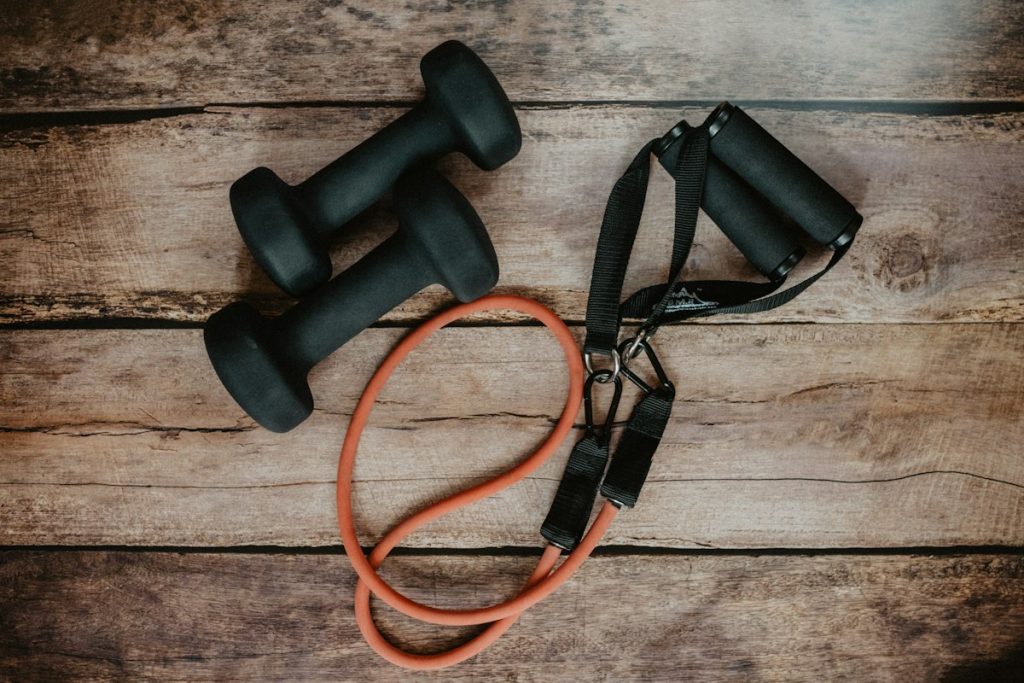
- Resistance bands — light, medium and heavy loops cover warm-ups, rows, presses and glute work.
- A pair of adjustable dumbbells — the most versatile piece of equipment you can buy for strength training.
- A kettlebell — ideal for swings, goblet squats and carries. Choose a moderate weight you can swing with good form.
- An exercise mat — for core work, stretching and mobility sessions.
- A sturdy step or bench — adds step-ups, split squats, incline push-ups and supported rows.
A 25-minute home session
Complete three to four rounds, resting as needed:
- Goblet squat × 12
- Single-arm dumbbell row × 10 per side
- Push-up (incline if needed) × 8–12
- Kettlebell swing × 15
- Dead bug × 8 per side
Keep it safe
Check equipment regularly for wear, especially bands. Keep the area clear of tripping hazards and never train with weights near children or pets. If a movement feels uncomfortable, choose an easier variation or ask your coach for an alternative at your next gym session.
Home and gym work best together
Home training is a great supplement, but the gym gives you heavier loads, more variety and a coach to keep your technique sharp. Many members use home sessions to stay consistent between visits.
Ready to train with a plan? Book a free trial session or see our membership options.